Residential Construction Inspection in Austin, TX: Kitchen Floor Cave-In and Drainage Investigation
Residential Property Inspection in Austin TX
When a floor begins to cave in, the visible damage inside the home is only part of the story. In many cases, the more important question is why the substrate deteriorated and whether exterior drainage, grading, paving, or landscaping conditions are continuing to feed the problem.
Building Envelope Solutions was asked to perform a residential construction inspection at a confidential Austin residence after the homeowner identified substrate deterioration in the kitchen and a kitchen floor cave-in condition. The goal of the inspection was to evaluate the likely cause of the observed damage and help the property owner understand what needed to happen next.
The Problem: Substrate Deterioration in the Kitchen
The concern began inside the home, where the kitchen floor showed areas of substrate deterioration and a floor cave-in condition. While the damaged floor was the most visible symptom, Building Envelope Solutions evaluated the surrounding property conditions to determine whether water was contributing to the deterioration below the kitchen area.
This type of residential construction inspection is important because floor movement, soft flooring, or substrate rot may be tied to conditions outside the home. If water is repeatedly directed toward or below the structure, interior repairs alone may not solve the underlying problem.
What Building Envelope Solutions Observed
Building Envelope Solutions identified exterior drainage conditions that were contributing to the issue. The driveway pavers, sandstone gravel platform, and raised landscape beds were all positioned above the grade of the home. Runoff from these areas could move toward the lowest point below the residence and pool near the kitchen area.
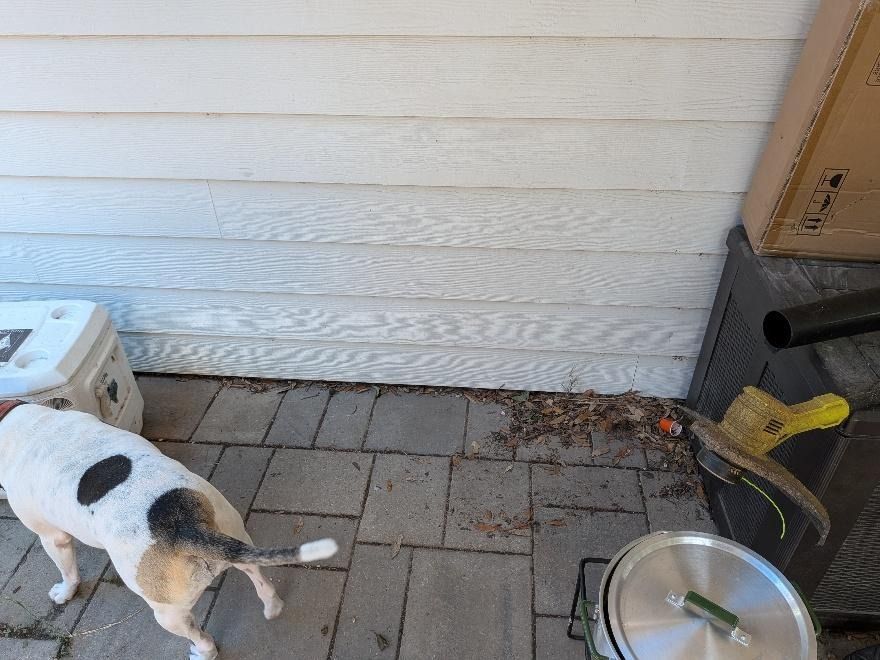
The inspection found that the driveway pavers created the appearance of controlled drainage, but water could still enter between the pavers and the dirt transition. From there, water could travel toward the lowest grade point under the home. Evidence of pooling, debris, and an observable cavity was also noted near the driveway area closest to the kitchen.
The sandstone gravel area was also above the driveway and grade of the home, allowing water to drain toward the deck and driveway before collecting at the same low point. Raised landscape beds added another source of water movement because they were installed substantially above the home's grade. As water entered those beds, it could drain down through the exterior areas and pond below the kitchen.
The report also noted gutter and downspout drainage concerns. Cracked downspout drainage components allowed water to exit the drainage system and enter beneath the driveway. BES also recommended confirming that gutter systems were clear and had proper flow capacity for water egress.
How BES Helped the Property Owner
The inspection helped connect the interior symptom to exterior site conditions. Instead of treating the kitchen substrate damage as only a flooring problem, Building Envelope Solutions identified how water runoff, raised exterior grades, driveway pavers, gravel areas, landscape beds, and drainage defects could contribute to substrate deterioration below the home.
BES recommended correcting the problematic exterior areas and performing drainage remediation. The report also recommended creating Scope of Work documents for demolition and remediation of the landscape beds, sandstone gravel, driveway, and drainage system so a contractor would have clear guidance for corrective work.
Because drainage remediation can affect site grading and water movement, BES noted that the drainage remediation Scope of Work should be reviewed by a licensed civil engineer. This is an important distinction: the goal is not just to repair visible damage, but to address the conditions that can allow the problem to continue.
Our report for the client included 8 photos and showed which way the water was flowing.
Why This Matters for Austin Homeowners and Property Buyers
A floor cave in or soft floor condition can be alarming, but the repair decision should start with causation. If water continues to pool below the home, flooring repairs may be temporary. Substrate rot, kitchen floor movement, crawlspace moisture, exterior drainage problems, and improper grading can all work together.
For residential property owners, buyers, and real estate stakeholders in Austin, a construction inspection can help separate surface symptoms from root causes. That clarity can support repair planning, contractor coordination, negotiation, budgeting, and risk reduction before more damage occurs.
Need a Residential Construction Inspection in Austin, Texas?
If your home has substrate deterioration in the kitchen, soft flooring, a floor cave-in concern, water pooling under the home, or unexplained moisture-related damage, Building Envelope Solutions can help evaluate the likely source of the problem.
Our team provides building envelope consulting, forensic building investigation, drainage-related observations, waterproofing guidance, and construction inspection support across Austin and San Antonio. Contact Building Envelope Solutions to schedule a confidential inspection and get a clearer path toward repair.
What can cause substrate deterioration in a kitchen floor?
Substrate deterioration in a kitchen floor can be caused by repeated moisture exposure, drainage problems, plumbing leaks, water pooling below the home, crawlspace moisture, or exterior grading conditions that direct water toward the structure.
Can exterior drainage issues cause a floor to cave in?
Yes. If water repeatedly pools below a home, it can contribute to substrate rot and structural deterioration over time. A floor cave-in condition should be evaluated to determine whether the cause is isolated or connected to broader drainage and building envelope conditions.
What is included in a residential construction inspection in Austin, Texas?
A residential construction inspection may include visual observations, evaluation of damaged areas, review of exterior drainage and grading conditions, assessment of likely moisture pathways, photo documentation, and recommendations for repair planning or further engineering review.
Why should drainage remediation be reviewed by a civil engineer?
Drainage remediation can involve site grading, water flow, hardscape removal, and how runoff moves around a structure. A licensed civil engineer can help confirm that the proposed drainage solution properly manages water away from the home.