Roofing Consultant vs. Roofing Contractor: Who Should Look at Your Commercial Roof First?
Quick Summary
Bring in a roofing consultant first when a commercial roof keeps leaking or a full replacement has been recommended.
-
Consultant Diagnoses the problem and defines the fix without selling the work.
-
Contractor Performs the repair or the new roof once the scope is defined.
-
Best order Diagnosis first, then bids, so every bid prices the same, correct repair.
-
The payoff Avoid replacing too soon or patching a roof that needs broader correction.
If your commercial roof keeps leaking or a contractor has recommended a full replacement, bring in a roofing consultant first. A consultant diagnoses the problem and defines the fix without selling the work. A roofing contractor performs the work. Getting the diagnosis first means every bid you collect prices the same, correct repair.
That order matters because roof decisions are expensive in both directions. Replacing a roof too soon spends capital you did not need to spend, and patching a roof that needs broader correction leads to the same leak after the next storm. Our
commercial roof consulting work for San Antonio and Austin property owners is built to answer one question before money moves: what is the roof actually doing?
How Is a Consultant's Job Different From a Roofer's?
A roofing consultant works for the owner to find out what is failing and to specify the repair. A roofing contractor is hired to install that repair or a new roof. Both roles matter. They simply answer different questions, and they work well in that order.
A good roofer can spot a lot from the roof surface, and many are honest about what they see. The difference is structural. A contractor's proposal is also a sales document, and the contractor decides the approach, materials, and details unless someone else has defined them. The
International Institute of Building Enclosure Consultants
describes independent consultants as enclosure experts who stand apart from suppliers, product manufacturers, and contractors. That independence is the point of hiring one.
| Topic | Roofing consultant | Roofing contractor |
|---|---|---|
| Main job | Diagnose conditions and define the repair | Install the repair or the new roof |
| Paid for | The evaluation, report, and Scope of Work | The roofing work performed |
| What you receive | Photo-documented findings, recommendations, and a Scope of Work | A proposal, then the completed work |
| When to involve them | Before repair, replacement, or bidding decisions | After the scope is defined |
| Looks beyond the roof | Walls, windows, flashing transitions, drainage, and other envelope components | Usually focused on the roof system |
When Should You Call a Roof Consultant Before a Roofer?
Call a consultant when the cause of the problem is unclear or the decision ahead is large. If the answer is obvious and small, such as a membrane puncture left behind after rooftop equipment service, a qualified roofer can usually handle it directly. The situations below are where an independent evaluation is most useful:
- Leaks keep returning after repairs. Repeat leaks usually mean the real source was never found.
- Contractors disagree. One roofer says repair, another says replace, and a third quotes something in between.
- A replacement is on the table. Before you commit capital, you should know whether the existing system can be repaired or restored.
- You suspect wet insulation or see ponding water. Trapped moisture changes the repair-or-replace answer and is not visible from the surface.
- You are buying or selling the property. A condition assessment tells you what the roof will cost you before you are at the negotiating table.
- Warranty, insurance, or storm questions are involved. Clear documentation of the cause matters when a third party has to agree with it.
- You manage several buildings. One well-built Scope of Work can bring consistency to repairs across similar roofs, though each roof still needs its own evaluation.
How Does a Consultant Decide Between Roof Repair and Replacement?
The decision comes down to how much of the roof system is still performing, including the layers you cannot see from the surface. A membrane that looks tired may sit on dry, sound insulation and be a good candidate for repair. A membrane that looks fine may be holding wet insulation that has to come out.
During a commercial roof evaluation, we look at:
- The membrane, seams, and surface condition
- Flashings and transitions at walls, parapets, curbs, and penetrations
- Drainage paths, drains, and areas where water ponds
- Insulation moisture and the condition of the deck below
- Rooftop equipment curbs and how past work was detailed
- Signs of storm, wind, or impact damage versus normal aging and maintenance-related wear
When the surface does not tell the full story, we recommend additional diagnostics such as moisture mapping, infrared review, electronic leak detection, or targeted testing. The result is a clear recommendation that can range from a targeted repair, to restoration, to a re-roof, to a complete tear-off down to the steel deck.
Central Texas conditions are part of that read. Commercial roofs here deal with intense heat and UV exposure, heavy rain events, high winds, and constant expansion and contraction. Those forces show up first at seams, flashings, and transitions, so that is where a careful evaluation spends its time.
Why Get a Scope of Work Before You Collect Roofing Bids?
A Scope of Work makes every bid price the same repair. Without one, each roofer chooses the approach, the materials, and the detailing, and you end up comparing three different projects that happen to share a building.
A well-prepared Scope of Work defines:
- The repair or replacement approach for each area of the roof
- The products and installation practices the contractor is expected to use
- How transitions, flashings, and penetrations are to be detailed
- The performance goals the finished work has to meet
With a scope in hand, you can compare bids line by line instead of guessing which proposal left something out.
Contractors also benefit, because they know exactly what to price and which materials to order. We can review the bids you receive against the scope, flag gaps or substitutions, and stay involved through construction with repair oversight. On many projects, we pair the Scope of Work with follow-up quality assurance testing on the corrected areas, so you know the repair worked before you accept it.
What If the Leak Is Not Coming From the Roof?
Many leaks blamed on the roof start somewhere else. Water travels behind cladding, along framing, and through transitions, then shows up at a ceiling far from where it entered. If the source is a wall detail, a roofer can replace roof sections that were never failing and the leak will still be there.
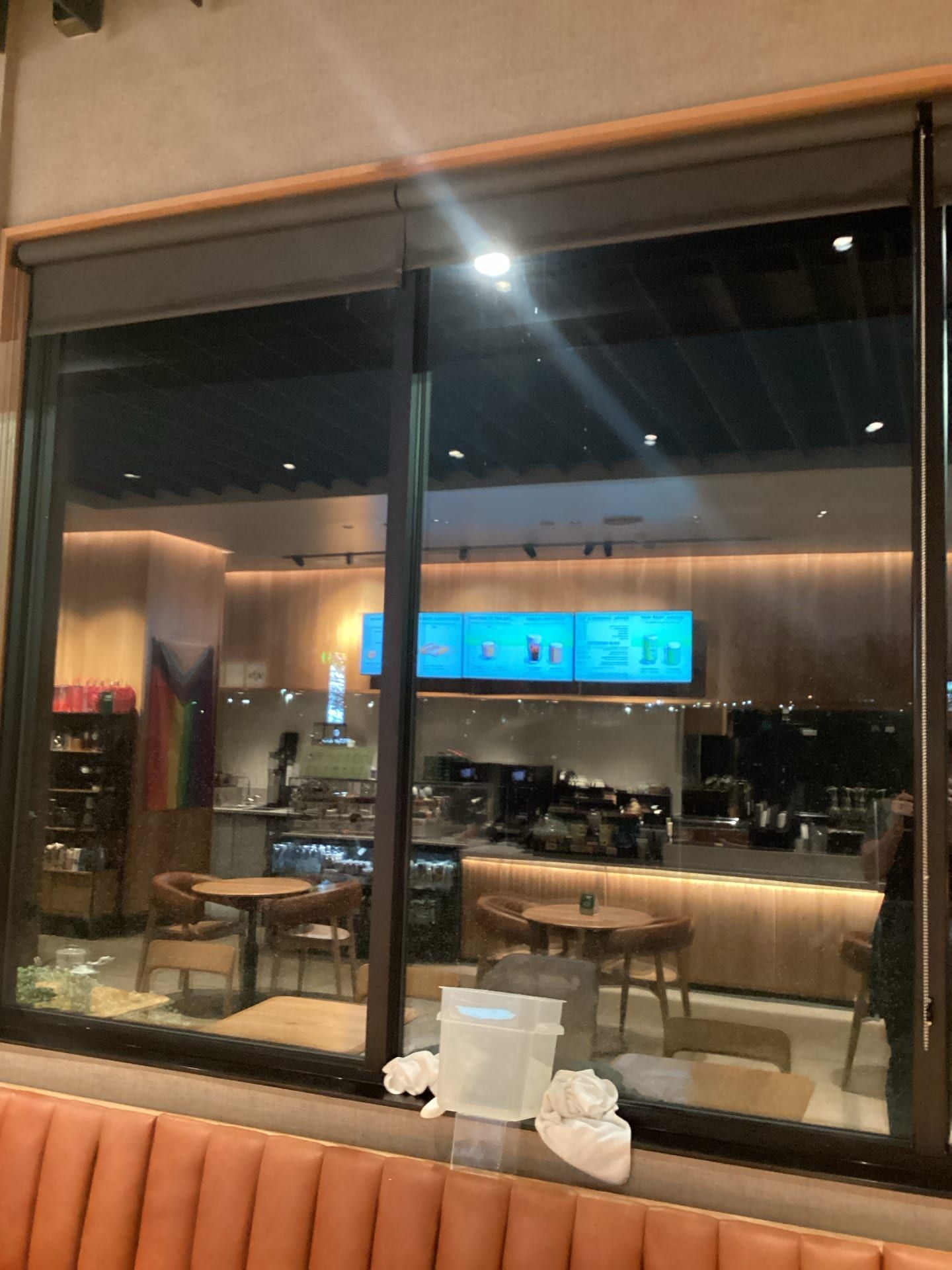
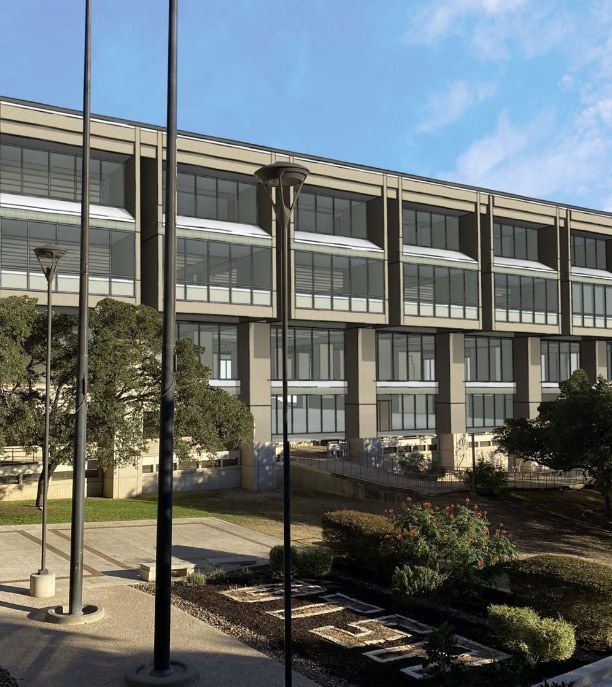
Two of our recent San Antonio projects show how this plays out. At a Starbucks, field water testing traced a storefront leak to the window header and awning transition. At an Ashley HomeStore, testing confirmed active water intrusion on the east face of the atrium tower above the windows, which led to a targeted EIFS repair scope rather than roof work.
That is why our roof evaluations look at the walls, windows, and transitions around the roof, not only the membrane. When the evidence points to the wall, we move to
water intrusion testing and leak investigation to isolate the pathway. For windows, storefronts, and curtain walls, we use field methods such as
AAMA and ASTM testing, including
ASTM E1105, which applies water while holding an air pressure difference across the assembly. On EIFS-clad buildings, an
EIFS inspection checks the sealant joints, flashing, and terminations where water often gets in.
What Happens When You Hire Us for a Commercial Roof Evaluation?
The process moves from a conversation, to a written proposal, to findings you can act on. Here is how a typical project runs:
- We talk through the problem by phone. You tell us where water or damage shows up, when it happens, what repairs have been tried, and what drawings or warranty documents you have.
- We email a written proposal. It outlines the evaluation scope and cost so you can review it before anything is scheduled. We do not perform free site visits, so the proposal is built from that first conversation.
- We evaluate the roof and the envelope around it. That includes the roof system plus the walls, transitions, penetrations, and drainage that affect it.
- We run diagnostics when the surface is not enough. Moisture mapping, infrared review, electronic leak detection, or targeted water testing, matched to the question.
- We deliver a photo-documented report. You see what is failing, what is still performing, and what we recommend.
- We help you carry it through. When repairs are needed, we develop the Scope of Work, review contractor bids against it, and can oversee the repair.
Because Thomas Kita Jr. is also a licensed Texas attorney and construction mediator, our findings are documented with the clarity a contract question, warranty claim, or dispute requires. If a roofing problem becomes a legal matter, we also provide expert witness and litigation support.
Get a Clear Answer Before You Commit to a Roof Project
If your commercial roof has a leak that will not stay fixed, a replacement quote you are unsure about, or bids that do not line up, start with an independent evaluation. Call our San Antonio office at (210) 446-8086 or our Austin office at (512) 553-8781, Monday through Friday, 9 AM to 6 PM.
Frequently Asked Questions
Does hiring a roof consultant replace my roofing contractor?
No. You still need a qualified roofing contractor to perform the work. The consultant defines what the work should be, helps you compare bids against that definition, and can check that the finished repair matches it. The two roles work together, with the consultant representing your interests as the owner.
Can a roof consultant help after hail or storm damage?
Yes. After a storm, the key question is which conditions the storm caused and which were already there from age or maintenance. We document the roof's condition with photos and findings that identify which conditions point to storm, wind, or impact damage and which point to age or maintenance. That record gives you a clearer basis for repair decisions and for conversations with other parties.
Is a roof evaluation worth it if the roof is not leaking yet?
Often, yes. If you are planning capital budgets, preparing to buy or sell, or own a roof that may be nearing the end of its service life, an evaluation tells you what you are working with before a leak forces the timeline. It also shows which maintenance items can extend the roof's life now.
Do you provide commercial roof consulting in Austin?
Yes. Along with our San Antonio office, we serve Austin and surrounding Central Texas from our office at 14425 Falcon Head Blvd., Building E, Suite 100. You can reach the Austin office at (512) 553-8781.